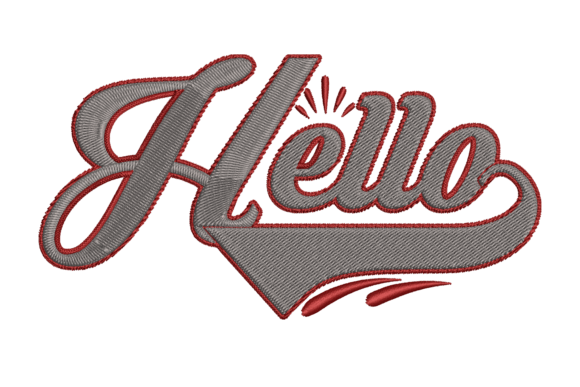
Reviewing Hello: A Designer's Take on Small Business Embroidery
As an experienced embroidery designer who has spent years turning digital files into tangible brand assets, I approach every new design with a critical eye. Today, I am reviewing a specific machine embroidery design titled Hello. The product description promises that this cute embroidery will give your fabrics an extraordinary look and notes that it comes with multiple embroidery variations. While the title is simple, the potential for this design in a commercial setting is significant. Whether you are an Etsy seller, a boutique owner, or a uniform decorator, understanding how a design like Hello translates from screen to fabric is crucial for maintaining professional standards.
The First Impression: Friendly Yet Professional
When I first encountered the Hello design, my immediate reaction was one of warmth. In the world of branding, the word "Hello" is universally recognized as a greeting, but its visual representation can vary wildly. Based on the description provided, this design leans towards being playful, friendly, and welcoming. It does not feel rigid or corporate; instead, it suggests a handmade product or a creative studio vibe. For small business merch, this personality is a goldmine. It works exceptionally well for brands that want to convey approachability, such as bakeries, florists, pet brands, and local craft shops.
The description mentions that the design comes with multiple embroidery options. This versatility is a key selling point for any designer looking to integrate Hello into their workflow. It allows for customization without needing to redraw the asset from scratch. However, before jumping into production, we must evaluate if this "cute" aesthetic aligns with your specific brand identity. If you run a high-end law firm, this might be too casual. But if you are building a community-focused brand or selling handmade goods, Hello could serve as a perfect accent that invites customer engagement.
Real-World Applications for Small Business Merch
Let us imagine a real scenario. You own a cozy café or a handmade soap shop. You need branded items that customers will love and keep. How does Hello fit into this ecosystem? The design is versatile enough to appear on various touchpoints of your business. As an embroidered patch, it adds a tactile element to denim jackets or tote bags that customers often carry around, effectively turning them into walking advertisements.
Consider the apron embroidery angle. For a bakery or coffee shop, placing Hello on the chest pocket of a staff apron creates an instant connection between the employee and the customer. It softens the service experience. Similarly, cap embroidery is a classic choice for event merch. A baseball cap featuring this design can be a great giveaway at local markets or trade shows. The design also shines on tote bag designs, serving as a stylish logo mark that feels less like a billboard and more like a piece of art.
For digital creators and Etsy sellers, Hello can be used as a design asset for printable mockups. Showing a client what a finished product looks like with this design helps visualize the final result. When used correctly, it elevates the perceived value of the finished product. It transforms a standard garment into a custom apparel item that feels personal and thoughtfully crafted.
Where to Exercise Caution in Production
While Hello has broad appeal, there are specific scenarios where a designer must exercise caution. Not every surface is suitable for every stitch pattern. One of the primary concerns is small patch sizes. If the design is scaled down too much, the details may become muddy, especially if the lettering involves intricate curves or thin lines. Always test the design at its intended size before mass production.
Curved surfaces present another challenge. Cap embroidery requires precise digitizing to ensure the text lays flat against the curve of the hat. If the hoop size is not appropriate for the curvature, the design may pucker or distort. Additionally, check the stitch density. High stitch density can make a design stiff and uncomfortable, particularly on lightweight fabrics or items that need frequent washing, such as work shirts or baby clothes. If the design includes detailed outlines, ensure they are robust enough to withstand friction and wear.
Fabric texture plays a massive role in the final look. On textured fabrics like heavy canvas or bouclé, fine details might get lost. Dark uniforms require careful thread color selection; if the contrast is low, the Hello design may fail to stand out. Always inspect the spacing and confirm the hoop size to ensure the design fits the physical constraints of the item. If the file format or specific technical details are not clearly defined in the product description, you must verify these before attempting a commercial embroidery project.
Impact on Brand Identity and Customer Trust
Every stitch contributes to your brand identity. Using a well-executed design like Hello signals attention to detail and professionalism. Customers notice when a brand takes the time to use quality embroidery rather than cheap printing. This attention to quality builds customer trust and recognition over time. A consistent visual language across all your design assets—from your website to your physical products—reinforces your message.
In the handmade product market, presentation is everything. An embroidered patch with Hello on a product label or packaging accent adds a layer of exclusivity. It tells the buyer that this item was made with care. This emotional connection drives buyer engagement and encourages repeat business. When a customer sees a cohesive, high-quality design on a tote bag or a cap, they are more likely to view the entire brand as premium.
Essential Designer Notes for Production
Before you finalize your decision to use Hello for your next batch of merchandise, follow these practical steps to ensure success:
- Test in Black and White: Convert the digital embroidery file to black and white first. This helps you see the structure and balance of the design without the distraction of thread colors.
- Check Small Sizes: Review how the design performs at small patch sizes. Ensure the lettering remains legible and the shapes do not merge together.
- Review Thread Color Contrast: Select thread colors that pop against your chosen fabric texture. Avoid colors that blend too closely with the background.
- Inspect Spacing and Hoop Size: Confirm that the design fits within your available hoop size and that the spacing allows for proper stabilizer placement.
- Test on Real Fabric: Do not rely solely on digital mockups. Stitch a sample on the actual fabric you plan to use to check for puckering or distortion.
- Use Proper Stabilizer: The right stabilizer is essential for maintaining the integrity of the design, especially on stretchy or delicate materials.
- Create a Mockup: Use a printable mockup to show clients what the final product will look like before committing to production.
- Compare Assets: Place Hello beside other design assets in your library to ensure visual consistency across your brand.
- Confirm Licensing: Most importantly, confirm commercial licensing terms. Just because a design is listed under Freebies does not automatically grant you the right to sell products made with it. Always read the license agreement carefully.
By following these guidelines, you can leverage the charm of Hello while avoiding common pitfalls. Whether you are creating custom apparel for a team or adding a unique touch to your boutique merchandise, this design offers a solid foundation for professional results. Remember, the goal is to create a finished product that reflects the quality of your business.
Embroidery is more than just decoration; it is a tool for storytelling. When you choose a design like Hello, you are choosing to tell a story of welcome and creativity. With the right execution, this simple word can become a powerful symbol of your brand's presence in the marketplace.