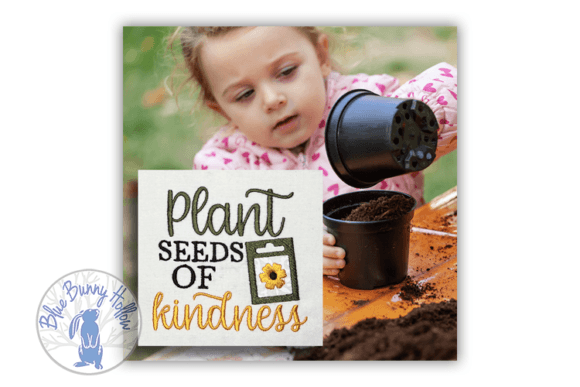
Plant Seeds of Kindness 2: A Designer's Review for Small Business Merch
As an experienced embroidery designer who has spent years refining designs for commercial use, I know that selecting the right machine embroidery design is about more than just aesthetics. It is a strategic decision that impacts your brand identity, production costs, and customer perception. Today, I am reviewing the "Plant Seeds of Kindness 2" design from the Outdoor Quotes category to determine its viability for small business merchandise, branded patches, and custom apparel. This review focuses on how this embroidery file performs in real-world scenarios for boutiques, cafes, bakeries, and handmade brands.
First Impressions: The Personality of the Design
The title "Plant Seeds of Kindness 2" immediately suggests a warm, inviting, and community-focused vibe. Based on the description, which highlights gardening inspiration and the beauty of the outdoors, this design likely balances rustic charm with professional elegance. For a small business owner looking to create handmade product lines, this design feels like it bridges the gap between a playful craft aesthetic and a premium brand asset.
In my initial assessment, the design appears to be friendly yet sophisticated. It avoids being overly cluttered while promising a sense of serenity. This visual personality makes it highly suitable for businesses that want to project values of growth, care, and nature. Whether you are a florist, a sustainable fashion label, or a local coffee shop, this digital embroidery file offers a way to communicate your ethos without using loud graphics. It feels ready to become a signature element of your small business merch.
Real-World Applications for Branded Merchandise
When evaluating this design for commercial projects, we must look at versatility. "Plant Seeds of Kindness 2" has the potential to serve multiple functions across different product categories. Here is how I see it performing in actual business scenarios:
- Embroidered Patches: This design would make an excellent standalone embroidered patch. Its gardening theme allows it to work well as a badge on denim jackets, canvas backpacks, or as a collectible item sold alongside other products. It adds a tactile, high-value feel to any accessory.
- Staff Uniforms and Aprons: For service-oriented businesses like cafes or bakeries, placing this design on the chest of an apron or a work shirt creates a cohesive team look. It reinforces a culture of kindness among staff while signaling to customers that they are in a welcoming environment.
- Tote Bag Designs: A tote bag design featuring this motif appeals directly to eco-conscious shoppers. The outdoor theme aligns perfectly with reusable bags, making it a logical choice for grocery stores, farmers markets, or bookshops.
- Cap Embroidery: On the front of a baseball cap or a structured dad hat, this design can serve as a subtle logo accent. It elevates the garment from standard promotional swag to a piece of wearable art that customers will actually want to keep.
- Product Packaging Accents: Imagine sewing a small version of this onto the neck of a linen pillow, the tag of a handmade soap box, or the corner of a fabric gift wrap. It transforms simple packaging into a memorable unboxing experience.
The ability to integrate this design into custom apparel and event merch makes it a versatile tool for brand recognition. It helps build trust by showing attention to detail and a commitment to quality craftsmanship.
Strategic Considerations and Limitations
While the design is promising, a professional approach requires us to identify where caution is necessary. Not every surface or size is suitable for every stitch density. You should be careful when applying "Plant Seeds of Kindness 2" to the following scenarios:
- Small Patch Sizes: If you intend to create very small patches (under 2 inches), intricate details may get lost or merge together during stitching. Always test the legibility at the intended final size.
- Curved Surfaces: While caps are great, highly curved surfaces can distort the design if not hooped correctly. Ensure the curvature of the cap matches the design's flow to avoid stretching issues.
- Dark Uniforms: If your brand uses dark fabrics, ensure there is sufficient contrast between the thread colors and the background. Dark threads on dark fabric can look muddy unless specific underlay techniques are used.
- Frequent Washing: For items like work shirts or aprons that undergo frequent industrial washing, check the stitch density. High-density areas might pill or fray over time if the stabilizer support is insufficient.
- Textured Fabric: Be cautious with highly textured materials like heavy corduroy or boucle wool. The needle penetration might be difficult, leading to puckering or skipped stitches.
Impact on Brand Identity and Customer Trust
In the world of commercial embroidery, consistency is key. Using a design like "Plant Seeds of Kindness 2" consistently across your design assets helps solidify your brand identity. When a customer sees this specific motif on a tote, a cap, and a uniform, it creates a visual anchor that aids in recognition.
This design contributes to a narrative of professionalism and warmth. It signals that your business cares about its customers and the community. In a market saturated with generic logos, a thoughtfully chosen embroidery file can elevate your perceived value. It suggests that you have invested time in curating a unique look, which fosters deeper buyer engagement and loyalty.
Practical Notes for the Embroidery Designer
Before committing to a large production run, I strongly advise following these technical steps to ensure the finished product meets your standards:
- Test in Black and White: Convert the design to grayscale first to check if the composition holds up without color distractions. This ensures the shape and balance are correct.
- Check Stitch Density: Review the density settings in your software. If the area is too dense, it may cause puckering; if too sparse, it may lack definition.
- Thread Color Contrast: Select thread colors that pop against your target fabric. Don't rely solely on the digital mockup; physical lighting changes how colors appear.
- Hoop Size Verification: Confirm the required hoop size for your machine. Large designs often require multi-hooping, which can affect alignment accuracy.
- Stabilizer Selection: Use the proper stabilizer for your fabric type. Cut-away stabilizers are usually best for woven garments like caps and polos, while tear-away works for lighter knits.
- Create a Printable Mockup: Before stitching, generate a printable mockup to show clients or stakeholders. This helps visualize the placement and scale before any money is spent on production.
- Commercial Licensing: Crucially, verify that you have the correct commercial licensing rights for "Plant Seeds of Kindness 2." Personal use licenses do not allow you to sell items embroidered with the design.
By treating the selection process with the same rigor as the stitching itself, you ensure that "Plant Seeds of Kindness 2" becomes a valuable asset rather than a liability. This design has the potential to bring a touch of nature and kindness to your brand, provided it is executed with technical precision and strategic planning.